
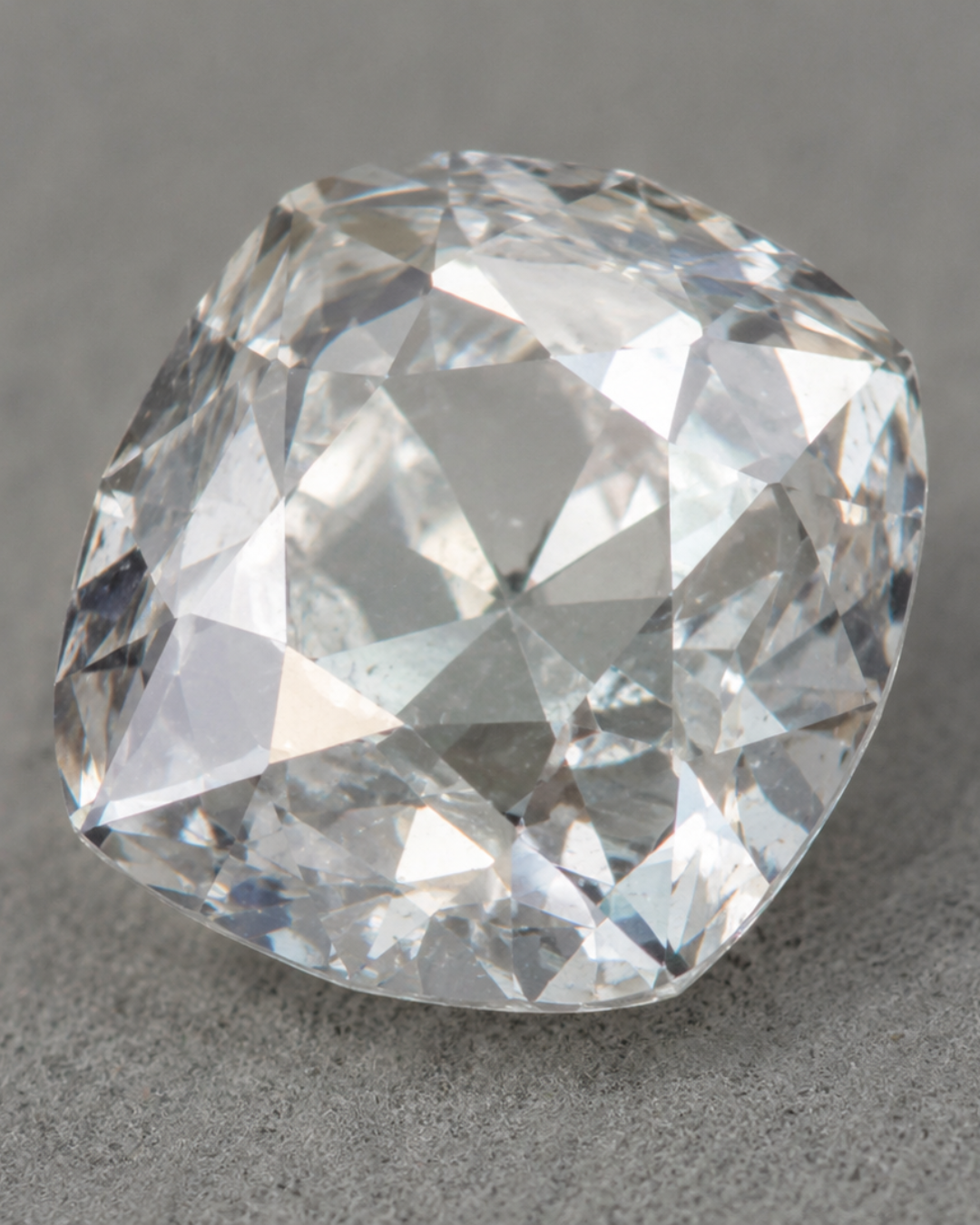
The Rise of the Old Mine Cut Diamond: Romance, Rarity & the Stone Everyone Is Searching For
There are moments in pop culture that quietly reshape an entire industry. The engagement of Taylor Swift and Travis Kelce was one of them.
When a Ring Goes Viral
When news broke of Taylor Swift's rumored old mine cut diamond engagement ring, jewelry lovers and industry insiders alike took notice. Suddenly, a cut that had been quietly beloved by antique collectors and connoisseurs was everywhere — on mood boards, in search bars, and on the fingers of women who had never heard the term before.
The old mine cut was already one of the most romantic, characterful stones in existence. The world just needed a reason to look.
What Is an Old Mine Cut Diamond?
The old mine cut is the predecessor to the modern brilliant cut — hand-faceted by craftsmen in the 1700s and 1800s, long before the precision of machine cutting existed. Named after the "old mines" of Brazil and India where diamonds were originally sourced, these stones were cut entirely by eye and candlelight, which gives them their signature warmth and soul.
Key characteristics that set them apart:
- High crown, small table — the top facets are steep and the flat top surface is small, creating a deep, dramatic look
- Large culet — the bottom point is open, creating that distinctive "eye" you see when looking straight down into the stone
- Soft, rounded square shape — often described as a cushion, but with more personality and less uniformity
- Warm, candlelit glow — old mine cuts scatter light differently than modern stones, producing a soft, romantic sparkle rather than the sharp brilliance of a contemporary cut
- Each one is unique — because they were cut by hand, no two old mine cut diamonds are exactly alike
Old Mine Cut vs. Modern Brilliant Cut
| Old Mine Cut | Modern Brilliant Cut | |
|---|---|---|
| Era | 1700s–1800s | 1900s–present |
| Facets | 58, hand-cut | 58, machine-cut |
| Shape | Rounded square/cushion | Round |
| Light return | Soft, warm, romantic | Sharp, high-intensity |
| Culet | Large, open | Pointed or very small |
| Personality | Antique, one-of-a-kind | Precise, uniform |
How We Source Old Mine Cut Diamonds
At Julez Bryant, sourcing old mine cut diamonds is a labor of love. These stones don't come from a catalog. We work with trusted estate dealers, antique gem traders, and private collectors to locate stones with the right combination of character, quality, and provenance.
Every old mine cut diamond we use has a history. It may have traveled from the mines of Brazil to the workshops of Georgian London, or passed through generations of a family before finding its way to us. That story becomes part of your ring.
We evaluate each stone individually — not just for the traditional 4Cs, but for the qualities that make an old mine cut special: its warmth, its personality, the way it catches light in a room.
Lab-Grown Old Mine Cuts: A New Chapter
Something new is entering the market: lab-grown old mine cut diamonds. For years, lab-grown stones were almost exclusively produced in modern brilliant cuts. But as demand for antique cuts has surged, a small number of cutters have begun applying old mine cut faceting to lab-grown rough — producing stones with the same romantic character at a more accessible price point.
We're watching this space closely. Lab-grown old mine cuts offer an exciting option for clients who love the aesthetic but want a budget-conscious path. As availability grows, we expect these stones to become a meaningful part of the conversation around custom engagement rings.
Make It Yours
Whether you're drawn to a genuine antique stone with a century of history, or a lab-grown old mine cut that honors that tradition in a new way, Julez Bryant can help you find the right diamond and design the ring around it.

Written by Kalsee Blanc

Leave a comment
This site is protected by hCaptcha and the hCaptcha Privacy Policy and Terms of Service apply.